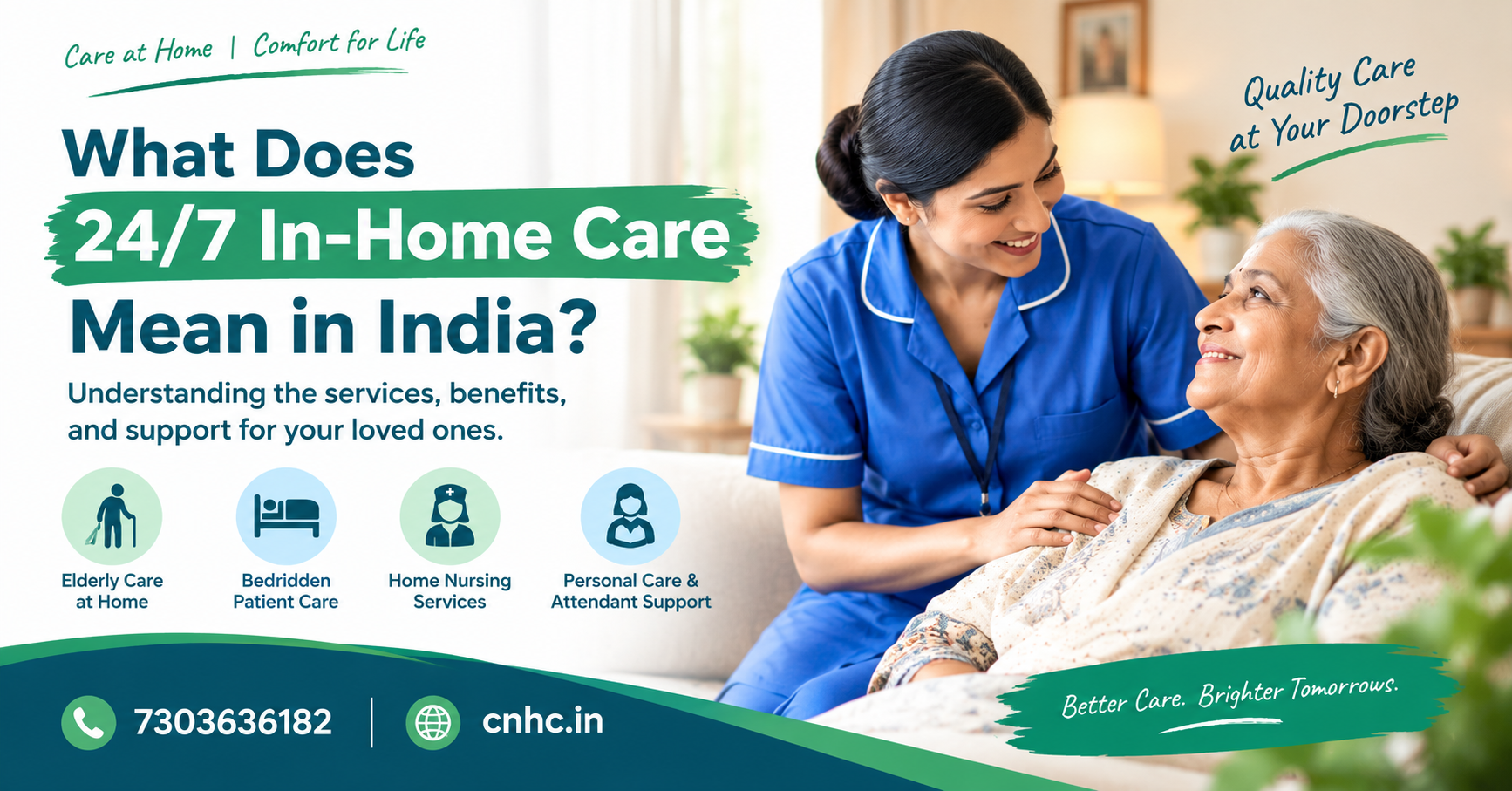
Taking care of an elderly parent, a bedridden family member, or a patient recovering from surgery can be challenging, especially when family members have work commitments and other responsibilities. Some patients need assistance throughout the day and night, while others require continuous supervision because of their medical condition or limited mobility. In such situations, 24/7 in-home care can provide valuable support to both patients and their families.
But what exactly does 24/7 in-home care mean in India? What services are included, who needs them, and how can families choose the right caregiver or nursing agency?
Let’s understand everything in simple terms.
What Is 24/7 In-Home Care?
24/7 in-home care means providing care and assistance to a patient in their own home, with support available around the clock. Instead of moving a loved one to a care facility, families can arrange professional assistance at home according to the patient’s needs.
The term “24/7” refers to 24 hours a day, seven days a week. Depending on the patient’s condition, this service may involve caregivers working in shifts, nurses providing scheduled visits, or a dedicated care team maintaining continuous coverage.
For example, an elderly person who cannot walk independently may need help getting out of bed, using the bathroom, eating meals, and moving safely around the house. A bedridden patient may need assistance with personal hygiene, repositioning, and regular observation.
With appropriate in-home care, patients can receive support in familiar surroundings while remaining close to their families.
It is important to understand that 24/7 care does not automatically mean that a qualified nurse is present at every moment. The type of professional required depends on the patient’s medical condition and the services included in the care plan.
What Services Are Included in 24/7 Home Care?
The services provided depend on the patient’s health, mobility, age, and level of independence. Common services include the following.
1. Personal Care and Daily Assistance
Some patients need help with everyday activities that they can no longer perform safely on their own.
A trained caregiver or attendant may assist with:
- Bathing and personal hygiene.
- Dressing and grooming.
- Eating and drinking.
- Walking and moving around the home.
- Using the toilet.
- Getting in and out of bed.
- Maintaining personal comfort and cleanliness.
These services are particularly useful for elderly individuals, people with disabilities, and patients recovering from illness or surgery.
2. Elderly Care at Home
Older adults may experience reduced mobility, weakness, balance problems, or difficulty managing everyday tasks. Living alone can make these challenges more difficult.
24-hour elderly care provides regular assistance and companionship. A caregiver can help with daily routines, prepare or assist with meals as agreed, accompany the elderly person during movement, and inform family members about changes in their condition.
For families whose elderly parents live alone, professional home care can offer additional support and reassurance.
However, caregivers should not replace medical professionals when an elderly person requires clinical assessment or treatment.
3. Bedridden Patient Care
Bedridden patients often require more intensive assistance because they cannot change positions or manage personal care independently.
Depending on the care plan, support may include:
- Helping the patient change position safely.
- Maintaining skin hygiene and cleanliness.
- Assisting with meals and hydration.
- Supporting safe transfers between the bed and wheelchair.
- Observing the patient’s comfort and general condition.
- Informing family members about unusual symptoms.
Regular repositioning, appropriate skin care, and proper hygiene are important for reducing the risk of pressure injuries.
Patients with complex medical needs may also require a registered nurse or another qualified healthcare professional.
4. Professional Nursing Care at Home
Some patients need clinical care rather than general assistance.
Depending on the patient’s condition, a qualified nurse may provide services such as wound dressing, catheter care, injections, monitoring prescribed vital signs, and other nursing procedures within their professional scope.
Nursing care may be required after surgery, during recovery from an illness, or for patients with chronic conditions.
Families should discuss the treatment plan with the patient’s doctor and confirm that the assigned professional has the appropriate qualifications and experience.
A caregiver and a nurse perform different roles. General attendants should not be expected to carry out medical procedures for which they are not trained or authorised.
5. Night-Time Patient Care
Night-time care is especially important for patients who need assistance getting out of bed, changing positions, using the bathroom, or managing other routine needs.
A night caregiver can help reduce the burden on family members who otherwise need to remain awake throughout the night.
For patients who require clinical monitoring or medical intervention, families should arrange appropriately qualified nursing support rather than relying solely on a general attendant.
Who Needs 24/7 In-Home Care in India?
Around-the-clock care may be suitable for several types of patients.
Elderly individuals: Older adults who need assistance with mobility, personal care, or everyday activities.
Bedridden patients: Individuals who cannot move independently and need regular assistance with hygiene, positioning, and daily routines.
Post-surgery patients: People who need support during recovery, according to their doctor’s recommendations.
Patients with chronic illnesses: Individuals whose conditions affect their mobility or ability to manage daily activities.
People living with disabilities: Those who need ongoing assistance with personal care and daily living.
Patients with advanced care needs: Individuals who may benefit from coordinated nursing, personal care, and family support at home.
Not everyone requires a caregiver for the entire day. Some patients need only a few hours of assistance, while others benefit from 12-hour or 24-hour coverage. The right arrangement depends on an individual assessment.
How Does 24/7 Home Care Work in India?
The process generally begins with understanding the patient’s condition and daily requirements.
Step 1: Assess the Patient’s Needs
The family should identify the patient’s mobility level, personal care requirements, medical needs, and preferred language. Information about existing illnesses, prescribed treatments, and the doctor’s recommendations can help determine the appropriate level of support.
Step 2: Choose the Right Type of Caregiver
A general attendant may be suitable for assistance with daily activities. A trained caregiver may be more appropriate for specialised personal care, while patients requiring clinical procedures may need a qualified nurse.
The selected professional should have relevant experience, verified credentials where applicable, and duties that match the patient’s needs.
Step 3: Decide the Working Hours
Families can explore different arrangements, such as 8-hour, 12-hour, or 24-hour care coverage.
Importantly, continuous 24-hour coverage does not necessarily mean one person works without breaks for an entire day. Properly planned shifts, rest periods, and replacement arrangements help maintain reliable care.
Step 4: Discuss Duties and Payment
Before the service begins, clarify the caregiver’s responsibilities, working hours, salary or service charges, weekly rest arrangements, replacement policy, and any additional costs.
Families should also discuss what happens if the assigned caregiver is absent or the patient’s needs change.
Step 5: Monitor the Quality of Care
Regular communication between the family and the care provider helps ensure that the patient’s needs are being met.
Families should review the patient’s comfort, hygiene, daily routine, and any changes in health. New or worsening symptoms should be brought to the attention of an appropriate healthcare professional.
How Much Does 24/7 In-Home Care Cost in India?
The cost of 24-hour home care varies according to the city, patient’s condition, caregiver’s experience, and type of service required.
For example, basic attendant care may cost less than professional nursing care for a patient who needs specialised clinical procedures.
Other factors that influence pricing include:
- Whether one or multiple caregivers are required.
- The number of working hours and shifts.
- The patient’s mobility and level of dependency.
- Experience and qualifications of the assigned professional.
- Night-time duties and additional responsibilities.
- Location and availability of trained staff.
Families should request a clear quotation based on the patient’s actual needs rather than relying on a single standard rate for every situation.
Before confirming a service, ask whether the quotation includes replacements, overtime, night duties, and other additional charges.
What Should You Check Before Hiring a Home Care Agency?
Choosing the right home care provider is an important decision because the caregiver may spend long periods with a vulnerable family member.
Consider the following points before making a decision:
- Check the agency’s reputation and service experience.
- Verify the caregiver’s identity and relevant background information.
- Confirm qualifications and experience for nursing or specialised care.
- Ask about staff availability and emergency replacement arrangements.
- Discuss duties, working hours, and payment terms in writing.
- Confirm how the agency handles complaints and service issues.
- Share the patient’s care instructions and emergency contacts.
- Make sure the home environment is suitable for the required care.
It is also helpful to introduce the caregiver to the patient and family before starting a long-term arrangement, wherever possible.
Is 24/7 Home Care Better Than Hospital Care?
Home care and hospital care serve different purposes.
Home care can be appropriate when a patient is medically stable but needs assistance with daily activities, ongoing personal care, or nursing services that can safely be provided at home.
Hospitals are necessary when patients need emergency treatment, intensive monitoring, urgent diagnostic investigations, or medical interventions that cannot be safely provided at home.
The decision should be made according to the patient’s condition and medical advice. If a patient develops severe breathing difficulty, chest pain, sudden unconsciousness, or other signs of a medical emergency, seek emergency medical assistance immediately.
Home care should support appropriate medical treatment, not delay it.
Get Reliable Home Care Support with CNHC
Finding suitable home care for a loved one can feel overwhelming, particularly when the family needs dependable support throughout the day and night.
CNHC (Chanderwati Nursing Agency) helps families explore home nursing, patient care, elderly care, and attendant services according to their requirements.
Whether your family needs assistance for an elderly parent, a bedridden patient, or someone recovering at home, the first step is to understand the patient’s needs and identify the right level of care.
Looking for home nursing or patient care services?
Visit https://cnhc.in/ to learn more about CNHC’s services and discuss suitable care arrangements for your loved one.
Frequently Asked Questions
1. Does 24/7 in-home care mean a nurse stays at home all day?
Not necessarily. It means care coverage is available around the clock. Depending on the patient’s needs, this may involve attendants working in shifts, scheduled nursing visits, or continuous nursing coverage.
2. Can a bedridden patient receive complete care at home?
Many bedridden patients can receive personal care and appropriate nursing services at home. However, the suitability of home care depends on their medical condition, the available equipment, and the level of professional support required.
3. Is 24-hour care available for elderly people living alone?
Yes, families can explore round-the-clock care arrangements for elderly individuals who need ongoing assistance. The suitability of the arrangement depends on the person’s health, safety needs, and level of independence.
4. Is a caregiver the same as a qualified nurse?
No. Caregivers and attendants generally assist with daily activities and personal care. Qualified nurses provide clinical nursing services within their training and professional scope.
5. How can I arrange 24/7 home care in India?
Start by assessing the patient’s needs, consulting their doctor when appropriate, and contacting a reliable home care agency. Discuss the caregiver’s qualifications, working hours, duties, charges, and replacement arrangements before confirming the service.
Final Thought: 24/7 in-home care is about providing appropriate, dependable support when a patient needs help beyond what family members can comfortably manage alone. With a suitable care plan and the right professionals, families can make home care more organised, comfortable, and responsive to their loved one’s needs.